Selected work
Protecting electricity consumers
This project explored how New Zealand’s electricity system affects people who rely on continuous power for their health, including disabled people and those with medical dependencies on electricity.
I led qualitative research to understand how these households experience risk, particularly around disconnection, and their interactions with electricity providers.
Through a series of in-depth interviews, I surfaced the realities of living with constant uncertainty about access to power, and the research revealed significant gaps between policy assumptions and their lived experience of how hardships are managed.
These findings were used to inform regulatory thinking and contributed to strengthening protections for vulnerable and medically dependent consumers, including rules designed to prevent the disconnection of households where loss of power would create serious safety issues.

Digital uptake
The MyKāingaOra app was designed to improve how tenants manage repairs and access information, but uptake was low.
I led discovery work to understand why. Instead of focusing on awareness, I looked at how tenants and Kāinga Ora staff were interacting with the service in real life.
This revealed a mismatch between the intended experience and the reality, driven by a set of assumptions that didn’t hold in practice.
We turned those insights into practical recommendations to improve the service and make it more usable, and more likely to be used.
Implementing the Food Act 2014
I worked on implementing the Food Act 2014, one of the largest regulatory shifts in recent New Zealand history.
Over four years, my team mapped how the system actually operated across food service, manufacturing, wine and cheese industries.
This was essential for understanding customer behaviour in context, how people navigated rules, where they adapted them and where our systems were broken.
These insights shaped major service and process redesigns during rollout.
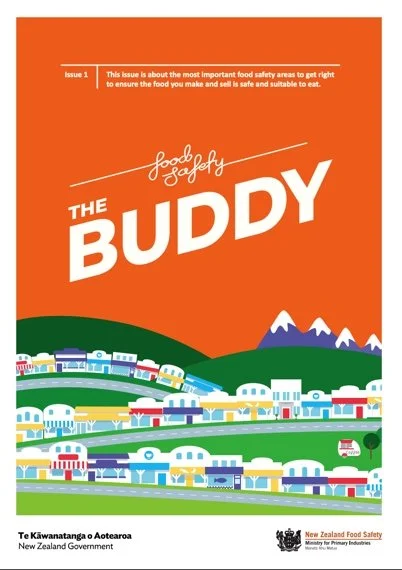
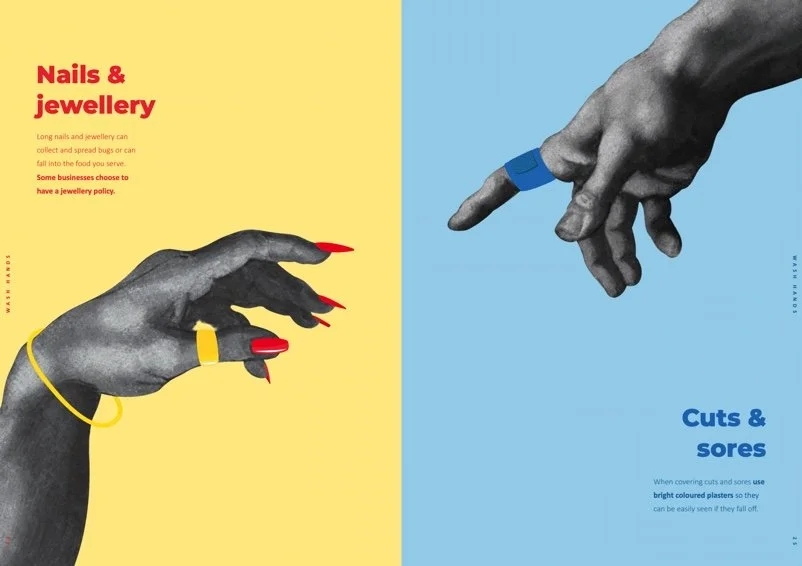
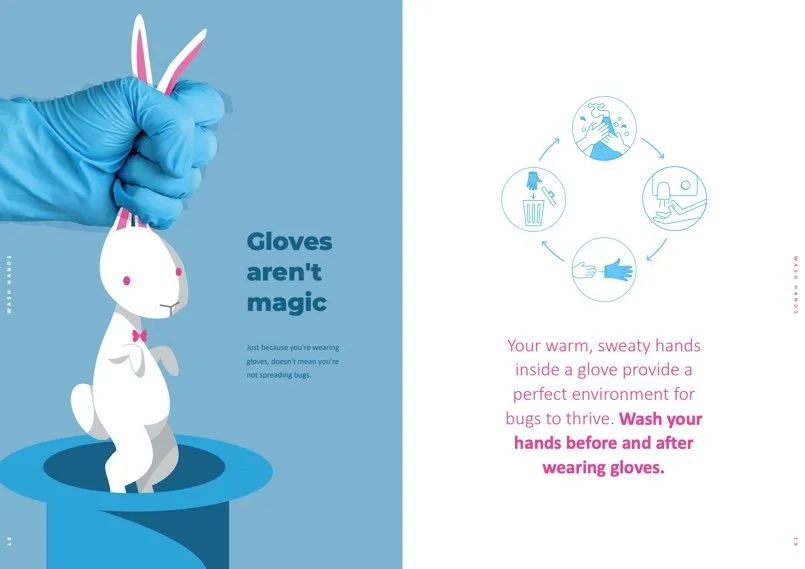
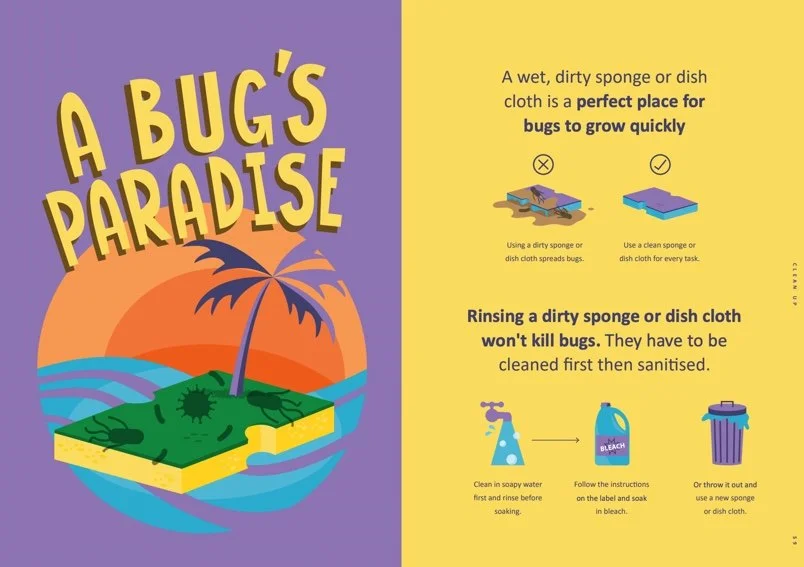
I used my background in magazine journalism to help design and produce The Buddy, a highly visual guide supporting staff training across food businesses.

We saw a gap between compliance expectations and how guidance was actually being used.
The Buddy's intended audience is low-skilled food handlers - the people who are most likely to be in direct contact with food without having food safety training. This is historically an audience the compliance content didn't cater to.
My small project team user tested multiple versions in real workplaces, refining based on attention, comprehension and usability, not just accuracy.
The final publication was distributed nationally (15,000+ copies) and widely adopted across the sector.Content Design

Bail Support Service
I worked on improving a pilot service supporting people on bail before national rollout.
The service made sense in theory, but relied heavily on frontline interpretation in practice. I worked with the people delivering it to understand what was actually happening day to day.
This revealed some patterns in how the service was drifting from its intended design. I translated these into actionable insights that informed fundamental internal redesign.

Simplifying Wine Regulations
I worked on improving regulatory processes for wine exporters, navigating complex export requirements.
Through fieldwork with winemakers, I observed how rules were interpreted and applied in practice.
This surfaced friction points that weren’t visible through consultation alone. These insights were translated into service blueprints that simplified processes and improved communication.
One of the tools my team designed as a result of our insights was the widely adopted Food Safety Template for winemakers, which simplified the Food Act rules for vineyards serving food.
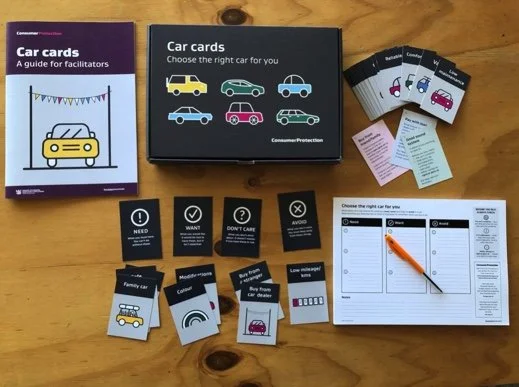
We designed a toolkit to help community service providers support people making safer decisions when buying cars on unsuitable finance.
The team understood the problem, but needed a clearer way to influence real customer behaviour change.
We visited community service providers to understand how they worked in practice and refine the problem. This revealed a need for simple, practical tools they could use with their customers.
We ran co-design sessions with providers and customers, rapidly prototyped ideas, and tested them in the field. This led to a working toolkit “Car Cards” built and refined through real-world feedback.
Car Finance Toolkit
Naenae Re-development
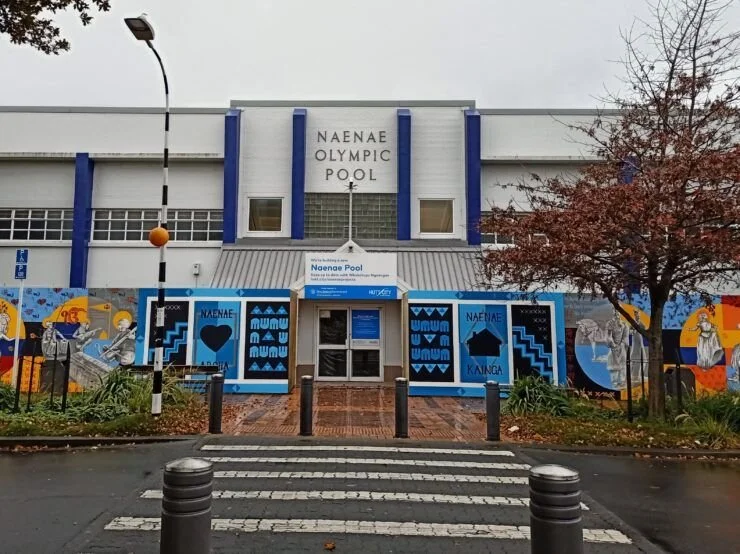
I supported Hutt City Council to engage the Naenae community and inform spatial planning for the town centre.
Through interviews, conversations and community workshops, we captured lived experiences from residents and local businesses.
These insights formed the Voice of the Community report, the basis for the design of the new Naenae pool and wider town centre redevelopment.